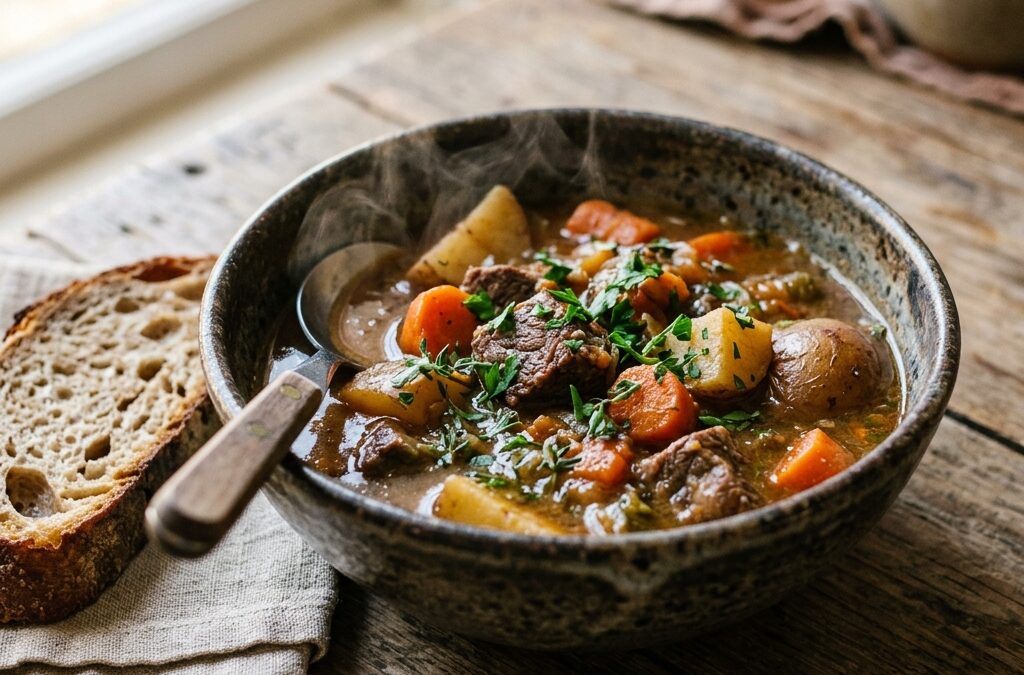
There is something deeply satisfying about leaving a pot of stew to do its thing all day and coming home to a kitchen that smells like a restaurant.
Slow cooker beef stew is about as classic as it gets. Chunks of beef, potatoes, carrots, and onions in a savory broth that has had all day to develop flavor. The slow cooker does the heavy lifting, and you do very little. This is the kind of recipe that makes the slow cooker feel like the best appliance you own.
The key difference between a great slow cooker stew and a mediocre one is the sear. Browning the beef before it goes into the pot adds a layer of depth that you cannot replicate any other way. It takes an extra ten minutes, and it is worth every one of them.
Everything else is pretty forgiving. The vegetables soften slowly over hours, the broth develops a richer color and flavor, and by dinner the beef is tender enough to fall apart with a fork. Serve it with crusty bread or over egg noodles for a proper cold-weather meal.
Choosing the Right Cut of Beef
Chuck roast is the right choice here, full stop. It is a tough cut with a lot of connective tissue, and that connective tissue breaks down over long, slow cooking into gelatin. That gelatin is what gives the broth body and makes the beef so tender. Cut it yourself into 1.5-inch chunks rather than buying pre-cut stew meat, which is often cut unevenly and can dry out.
Avoid lean cuts like sirloin or round. They will turn dry and stringy after eight hours in the slow cooker. Chuck roast has the fat and structure to hold up.
Searing: The Step Worth Doing
Season the beef with salt and pepper and get your skillet ripping hot before adding any oil. Work in batches, leaving space between pieces. Crowding the pan causes steam instead of browning, and steamed beef has none of the deep, nutty flavor that a proper sear gives you.
Two to three minutes per side, then into the slow cooker. Deglaze the skillet with a splash of beef broth and pour those browned bits straight into the pot. That is pure flavor you would otherwise leave in the pan.
Building the Broth
Good beef broth is the foundation. Use a low-sodium version so you can control the salt. Tomato paste is a small addition that adds color, umami, and a subtle richness to the final broth. Worcestershire sauce and a bay leaf round things out. These are not exotic ingredients, just a few things that layer together into something that tastes like it cooked for a long time. It does cook for a long time, but the point is it tastes like it.
Thicken the broth at the end by stirring a cornstarch slurry in during the last 20 to 30 minutes on high. This is optional but turns the broth from thin to properly saucy, which is what most people are after in a stew.
The Vegetables
Cut potatoes and carrots into larger pieces than you think you need, about 1.5 to 2 inches. Small pieces turn to mush over eight hours. Yukon Gold or red potatoes hold their shape better than russets, which tend to disintegrate. Celery adds flavor but gets very soft; that is fine here.
Add mushrooms if you want more depth. Frozen peas stirred in at the very end, off heat, add color and a little sweetness without getting grey and overcooked.
Cook Times
Low and slow is the goal. Eight to ten hours on low is ideal and produces the most tender beef. Four to five hours on high works if you are pressed for time, but the texture of the beef is slightly less silky. If your schedule allows it, use the low setting.
Tips for the Best Stew
- Do not skip the sear. That browning is flavor you cannot add back later.
- Cut vegetables large so they hold their shape through a full day of cooking.
- Taste and adjust salt right before serving, not before. Salt concentrates as liquid reduces.
- A splash of balsamic vinegar stirred in at the end brightens the whole pot.
- Stew is better the next day. Make it the night before if you can.
Storing and Reheating
Stew keeps in the fridge for up to four days. It also freezes beautifully for up to three months. Store in individual portions for easy weeknight reheating. Reheat gently on the stovetop over low heat, adding a splash of broth if it has thickened too much in the fridge.
Final Thoughts
This is the kind of recipe you make on a Sunday in October and remember for the rest of the season. It is not complicated, it is not quick, but it delivers on every promise a beef stew should make. Once you have the technique down, this becomes a reliable fixture in your cold-weather cooking rotation.
Slow Cooker Beef Stew
Ingredients
Instructions
- Season beef chunks generously with salt and pepper. Heat vegetable oil in a large skillet over high heat until nearly smoking. Working in batches, sear beef on all sides, 2 to 3 minutes per side, until deeply browned. Transfer to the slow cooker.
- Reduce heat to medium. Add onion and garlic to the skillet and cook 2 minutes, stirring. Add tomato paste and stir for 1 minute. Deglaze with 1/2 cup of beef broth, scraping up all browned bits. Pour into the slow cooker.
- Add remaining 2 cups broth, Worcestershire sauce, thyme, and bay leaf to the slow cooker. Add potatoes, carrots, and celery. Stir to combine.
- Cook on LOW for 8 to 10 hours, or HIGH for 4 to 5 hours, until beef is fork-tender.
- About 20 minutes before serving, whisk together cornstarch and cold water to make a slurry. Stir into the stew, increase to HIGH if on LOW, and cook uncovered for 20 minutes until broth thickens.
- Remove bay leaf. Stir in frozen peas if using. Taste and adjust seasoning. Serve with crusty bread or over egg noodles.